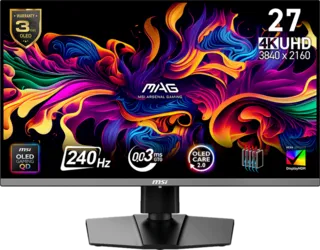
Overview
OLED and IPS solve different problems. OLED is the more exciting technology for contrast, HDR, and motion clarity. IPS is still the safer everyday choice for many work-heavy desks because it is familiar, bright enough, and less sensitive to static UI habits.
The MonitorCritic dataset has strong examples of both, which makes this comparison one of the most important decisions before picking a specific model.
Why Choose OLED
OLED panels have per-pixel lighting, so black levels and perceived contrast are excellent. They also have extremely fast response times, making motion look cleaner than many LCD options.
OLED makes the most sense for gaming, HDR video, mixed entertainment, and users who want the most premium visual experience.
Why Choose IPS
IPS monitors are still practical workhorses. They are available across many prices, sizes, and resolutions. They are also easier to recommend for static productivity use because burn-in is not part of the ownership equation.
IPS makes sense for offices, coding, photo editing, general productivity, and shoppers who want a lower-maintenance display.
The Tradeoff
OLED often wins on image quality and motion. IPS often wins on simplicity, price, and long static desktop sessions. The right answer depends less on specs and more on how many hours a day the monitor will show static app interfaces.
Final Recommendation
Choose OLED if games and media are the emotional reason for the upgrade. Choose IPS if your monitor is mostly a work surface and gaming is secondary.