Introduction
Milliseconds matter in competitive gaming. The difference between victory and defeat in Valorant, CS2, or other professional esports often comes down to split-second reactions—and your monitor plays a critical role in that equation. An esports-grade monitor isn't just about having a high refresh rate; it's a precision instrument designed to give competitive players the fastest possible visual feedback and most responsive gaming experience available.
In 2025, tournament-standard monitors have evolved significantly. Professional esports organizations now demand specific specifications, certified response times, and proven performance in high-stakes competition. Whether you're grinding ranked matches or aspiring to professional competition, understanding what makes a monitor "esports-grade" is essential for building a competitive setup that actually delivers measurable advantages.
This comprehensive guide breaks down the specifications, top performers, tournament standards, and budget tiers to help you invest in the right monitor for your competitive gaming goals.
What Makes a Monitor "Esports-Grade"?
An esports-grade monitor goes far beyond consumer gaming displays. These are precision tools engineered for professional competitive play, with strict criteria that separate tournament-standard equipment from casual gaming monitors.
The Core Differentiators:
- Ultra-low input lag: Combined with the system and GPU, total latency under 20ms
- Certified response times: True 1ms or sub-1ms gray-to-gray measurements
- High refresh rates: Minimum 240Hz; professional tournaments increasingly demand 360Hz+
- Tournament certification: Used and approved in major esports competitions
- Professional-grade color accuracy: While maintaining competitive performance
- Adaptive sync technology: G-Sync or FreeSync for tear-free competitive gameplay
The critical distinction is that esports monitors prioritize speed and responsiveness over everything else. They sacrifice deep color accuracy and wide viewing angles that professional content creators need, instead optimizing for the fastest possible visual feedback loop.
Key Specifications Explained: The Competitive Advantage
Refresh Rate: The Foundation of Competitive Advantage
Refresh rate determines how often your monitor updates the image per second:
- 144Hz: Entry-level competitive (6.94ms per frame)
- 240Hz: Tournament minimum standard (4.16ms per frame)
- 360Hz: Professional tournament standard (2.77ms per frame)
- 500Hz+: Elite tier for top-tier competition
Each step up reduces the time between frames, giving you more up-to-date visual information.
Response Time: The True Measure of Responsiveness
Not all "1ms" monitors are equal:
- Gray-to-Gray (GtG): The industry standard measurement
- MPRT: Marketing-focused, often misleading
- True esports grade: Sub-2ms GtG with minimal overshoot
Panel Type: TN vs IPS for Competitive Play
TN Panels:
- Fastest response times (1ms or less)
- Lower input lag
- Narrow viewing angles
- Less accurate colors
- Best for: Pure competitive FPS
Fast IPS Panels:
- Nearly as fast as modern TN
- Better colors and viewing angles
- Slightly higher input lag
- Best for: Versatile competitive play
Input Lag and System Latency
Total system latency includes:
- Peripheral input (mouse/keyboard)
- USB polling
- Game processing
- GPU rendering
- Display processing
- Panel response
Esports target: Under 20ms total, under 5ms display-only
Adaptive Sync: G-Sync vs FreeSync
Essential for tear-free gameplay:
- NVIDIA G-Sync: Proprietary, consistent performance
- AMD FreeSync: Open standard, wider compatibility
- Both work: On most modern esports monitors
Tournament Standard Requirements: What Pros Actually Use
Professional Tournament Standards (2025)
Minimum Requirements:
- 240Hz refresh rate
- 1080p resolution
- Under 5ms input lag
- Adaptive sync support
- Tournament mode settings
Preferred Specifications:
- 360Hz refresh rate
- Fast IPS or premium TN panel
- Under 3ms input lag
- DyAc/ELMB motion blur reduction
- Customizable crosshairs
Major Tournament Monitor Usage
CS2 Majors: Primarily Zowie XL2566K (360Hz) Valorant Champions: Mix of 240Hz and 360Hz displays Overwatch League: 360Hz standard Apex Legends: 240Hz minimum, 360Hz preferred
Top Esports Monitors in 2025: The Professional Lineup
1. Zowie XL2566K 360Hz (Tournament Gold Standard)
- Refresh: 360Hz
- Panel: Fast TN
- Response: 1ms GtG
- Features: DyAc+ motion blur reduction
- Price: Premium
- Best for: Serious competitive players
2. ASUS ROG Swift PG259QN 360Hz
- Refresh: 360Hz
- Panel: Fast IPS
- Response: 1ms GtG
- Features: G-Sync, HDR10
- Price: Premium
- Best for: Players wanting IPS colors with speed
3. BenQ Zowie XL2546K 240Hz
- Refresh: 240Hz
- Panel: TN
- Response: 1ms GtG
- Features: DyAc+, Shield (focus aid)
- Price: Mid-range
- Best for: Budget-conscious competitive players
4. Alienware AW2524H 500Hz
- Refresh: 500Hz
- Panel: Fast IPS
- Response: 1ms GtG
- Features: Extreme refresh rate
- Price: Elite tier
- Best for: Top-tier competitive players
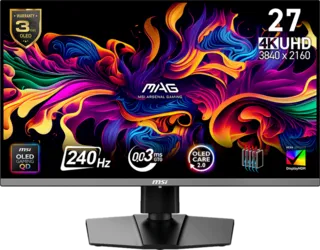
5. LG UltraGear OLED 240Hz
- Refresh: 240Hz
- Panel: OLED
- Response: 0.03ms GtG
- Features: Perfect blacks, infinite contrast
- Price: Premium
- Best for: Versatile competitive/casual hybrid
Game-Specific Monitor Recommendations
FPS Games (Valorant, CS2, Overwatch 2)
Priorities:
- 360Hz if budget allows (240Hz minimum)
- Under 3ms input lag
- TN or Fast IPS panel
- DyAc/ELMB support
Recommended: Zowie XL2566K, XL2546K, or ASUS PG259QN
MOBA Games (League of Legends, Dota 2)
Priorities:
- 144Hz-240Hz sufficient
- Good color accuracy
- Wide viewing angles
- Lower priority on extreme refresh
Recommended: Fast IPS 240Hz displays
Battle Royale (Apex Legends, Fortnite)
Priorities:
- 240Hz minimum
- Good color accuracy for spotting enemies
- Adaptive sync essential
- Balance of speed and clarity
Recommended: Fast IPS 240Hz-360Hz displays
Budget Tiers: Finding Your Competitive Level
Entry Competitive Tier: ₹20,000-30,000 ($250-350)
- 144Hz refresh rate
- 1080p resolution
- 4-5ms response time
- Basic adaptive sync
- Example: AOC 24G2, ASUS VP249QGR
Mid-Tier Esports: ₹30,000-50,000 ($350-600)
- 240Hz refresh rate
- 1080p resolution
- 1-2ms response time
- G-Sync/FreeSync Premium
- Example: BenQ XL2546K, ASUS VG259QM
Professional Grade: ₹50,000-80,000+ ($600-1000+)
- 360Hz+ refresh rate
- 1080p resolution
- Sub-1ms response time
- G-Sync/FreeSync Premium Pro
- Tournament features
- Example: Zowie XL2566K, ASUS PG259QN
Setup and Optimization for Competitive Play
Monitor Positioning
- Distance: 20-28 inches from eyes
- Height: Top of screen at or below eye level
- Angle: Slight tilt back (10-20 degrees)
- No glare: Position away from windows/lights
In-Game Settings Optimization
- Disable V-Sync: Essential for lowest latency
- Enable G-Sync/FreeSync: If available
- Cap FPS 3-5 above refresh rate: Smoothest experience
- Use fullscreen: Lowest input lag
- Disable motion blur: Personal preference
System Optimization
- GPU drivers: Latest version
- Game mode: Enabled in Windows
- Fullscreen optimizations: Disabled
- Background apps: Closed
- Wired connection: Ethernet preferred
Common Mistakes When Choosing Esports Monitors
1. Prioritizing Specs Over Practical Use
Don't buy 360Hz if you mainly play single-player games.
2. Ignoring Panel Technology Trade-offs
TN is fastest; IPS has better colors. Choose based on priorities.
3. Chasing Specs Unnecessarily
240Hz is plenty for most competitive players. 360Hz is for elite competition.
4. Neglecting Cable Quality
Use DisplayPort 1.4 or HDMI 2.1 cables. Cheap cables can limit performance.
5. Skipping In-Game Optimization
A well-optimized 240Hz setup beats a poorly optimized 360Hz setup.
6. Ignoring Desk Setup and Ergonomics
Position matters as much as the monitor specs.
Key Takeaways: Esports Monitors for 2025
- 240Hz is the minimum for serious competitive play
- 360Hz is the tournament standard for professional competition
- Input lag matters more than refresh rate above 240Hz
- Panel type depends on your games - TN for pure FPS, IPS for versatility
- Budget appropriately - diminishing returns above ₹50,000
- Optimize your setup - hardware is only half the equation
The right esports monitor gives you a measurable advantage, but only when combined with proper setup, optimization, and practice. Invest wisely, and grind consistently.