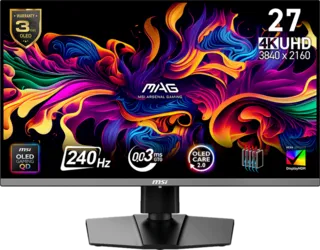
What is Refresh Rate and Why is it Important?
Refresh rate is the number of times a display completely updates its screen per second, expressed in hertz, or Hz. Refresh rate is produced by the monitor itself and not the processor or graphics card.
Important distinction: Refresh rate differs from frame rate. While refresh rate is the monitor's capability, frame rate is what the graphics card produces.
How They Work Together
For peak performance, you need:
- A monitor with high refresh rate
- A system that can produce high frame rate
If either is not up to the task, the quality of the display may be impacted, and you will not experience the full benefits.
What is the Ideal Refresh Rate?
Historical Standard
Until the mid-2010s, 60Hz was regarded as the standard refresh rate for monitors. For some users, that may still be sufficient for basic tasks.
Modern Minimum: 75Hz
Why 75Hz is now the baseline:
- 60Hz is associated with a flicker effect
- May contribute to eye strain
- Uncomfortable for long periods of use
- 75Hz provides a more comfortable viewing experience
For basic office work and casual use, 75Hz is now regarded as a better starting point.
Why Do You Need High Refresh Rates for Creative Work?
Professional Design Applications
Professional designers, especially those working in:
- VFX (Visual Effects)
- Motion Design
- 3D Animation
These professionals deal with heavy workflows that require fast refresh and high visual quality.
Refresh Rate Requirements for Creatives
Basic Creative Work:
- 60Hz or 75Hz sufficient for most jobs
Advanced Creative Work:
- 120Hz or 165Hz recommended
- Essential for multimedia content developers
- Important for graphics testing
Benefits for Creative Work
Motion Resolution Improvement:
- Higher refresh rates increase picture sharpness
- Better consistency in moving images
- Removes image stuttering
- Almost zero loss of image detail and quality
Crucial for:
- Video editors checking footage
- Animators reviewing slow-motion
- Every single frame appears crisp and vivid
Hardware Requirements
Important Note: If you invest in a 120Hz+ monitor, ensure your graphics card and processor can produce a high frame rate. Only then can you experience noticeable improvements in picture quality and smoothness of movement.
ViewSonic ColorPro professional monitors are equipped with high refresh rates to ensure your work always looks its best.
Why Do You Need High Refresh Rates for Gaming?
Gaming Refresh Rate Starting Point
For esports or high-definition gaming:
- 144Hz is considered a better starting point
- Higher refresh rates critical for fast-paced games
- Affects how clear and correct visuals appear
Key Gaming Benefits
1. Reduced Input Lag
For the smoothest gameplay:
- Under 10.9ms lag time is OK
- 144Hz monitor delivers about 3.5ms lag time
- This can be a huge difference-maker
- Especially important for competitive esports
2. Reduced Ghosting
Monitor ghosting is almost like motion blur:
- Previous image continues to appear on next frame
- Higher refresh rates minimize this effect
- Results in clearer motion
3. Eliminated Screen Tearing
Screen tears occur when:
- Monitor shows two different frames simultaneously
- Caused by mismatched refresh and frame rates
Solution:
- 144Hz refresh rate supports up to 144 frames per second
- Eliminates ghosting and tearing
- Graphics appear more fluid
Gaming Refresh Rate Recommendations
Entry-Level Gaming:
- 75Hz minimum
- 144Hz recommended
Competitive Gaming:
- 144Hz starting point
- 165Hz-240Hz better
- 360Hz for professional
Esports/Professional:
- 240Hz+ recommended
- 360Hz optimal
- Every millisecond counts
Final Thoughts
For General Use
- 75Hz is the modern minimum standard
- Provides comfortable viewing
- Reduces eye strain
- Better than 60Hz for all users
For Creative Work
- 120Hz-165Hz recommended for professionals
- Essential for video editing and animation
- Ensures frame accuracy
- Better workflow efficiency
For Gaming
- 144Hz is the sweet spot for most gamers
- Higher refresh rates benefit competitive play
- Match refresh rate to your GPU capabilities
- Higher is generally better
Bottom Line: Having the ideal refresh rate for your monitor not only gives you better performance, but can protect your eye health.
ViewSonic Gaming Monitors
ViewSonic offers a range of gaming monitors with various refresh rates to suit different needs and budgets.
ViewSonic GAMING Monitors: See the full lineup for monitors designed specifically for gaming performance.